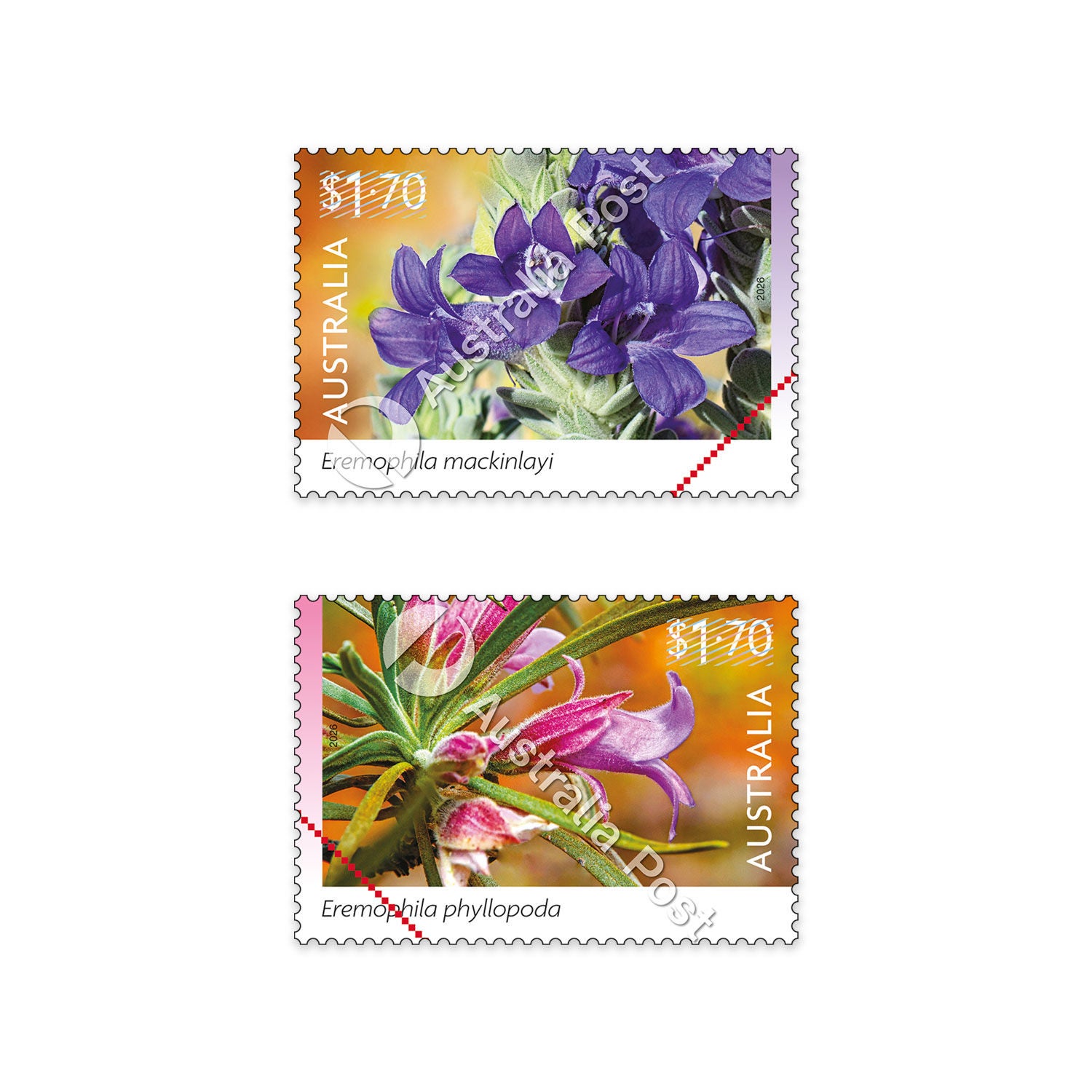
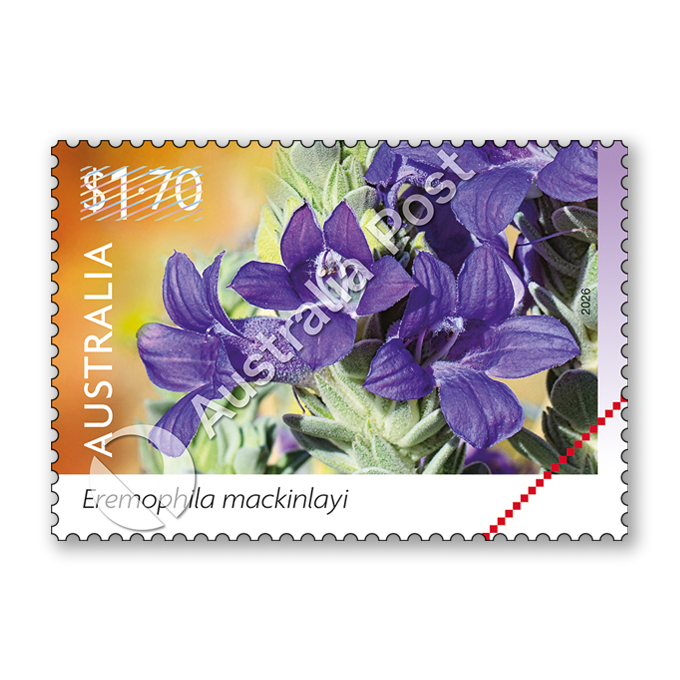
OverviewEremophila is a large genus of flowering plants that grow across most of mainland Australia’s arid and semi-arid regions, especially in Western Australia. They thrive on relatively low rainfall and can survive long droughts. In fact, the name Eremophila is derived from ancient Greek terms meaning ‘desert loving’. Even under dry conditions, they can produce masses of flowers, which attract birds and insects. For all these reasons, Eremophilas are becoming increasingly popular as useful and beautiful garden plants in our warming climate. There are thought to be more than 270 Eremophila species, of which about 230 have been formally described and named. (Some species grow in remote regions only, so there is more scientific work to do.) There are also many subspecies and hybrids, offering a wide variety of flower and foliage shapes, colours and textures. In habit they range from ground covers to small trees, although most are small or medium shrubs. Indigenous Australians have long used particular species for ceremonial and medicinal purposes. Certain Eremophilas are toxic to livestock, but others are used for fodder. Some species excrete a sticky resin, which coats the leaves and stems to help the plant retain moisture. In times of extreme drought some plants can appear dead – but when good rain eventually arrives, they re-sprout with vigour. Although they have evolved in low-nutrient soils, in gardens Eremophilas appreciate some low-phosphorous fertiliser. They can cope with a wide range of soil types, though only a few do well in very sandy soils. Eremophilas prefer a sunny position, and many species are frost-hardy. In gardens, the plants are more likely to be killed by over-watering than under-watering, as too much moisture makes them more susceptible to fungal and insect attack. Even during times of water restrictions, Eremophilas planted in the earth (though not in pots or containers) can generally do well without additional watering. Eremophila flowers come in many colours, ranging from white and cream through yellows, pinks, reds, blues and purples. The foliage has the greatest variety of any Australian plant genus, ranging in colour from silver-grey through to a rich dark green, and in texture, shape, size and thickness. Some Eremophila species are pollinated by birds, others by insects. Those pollinated by birds usually have yellow, pink or red flowers. The species depicted on the stamps are insect-pollinated (entomophilous). These generally have blue, lilac, pink, purple or sometimes white flowers, and a broader shape with a ‘platform’ on which the insect can land, walk into the flower where pollen sticks to its legs, then fly to the next flower. |
Issue date | 24 February 2026 |
Issue withdrawal date | 1 September 2026 |
Denomination | 2 x $1.70 |
Stamp & Product Design | Jo Muré, Australia Post Design Studio |
Paper: gummed | Tullis Russell 104gsm Red Phosphor/Blue PVA Stamp |
Paper: self-adhesive | Tullis Russell Red Phos PSA (P55) 100gsm Release Self/Adh |
Printer | RA Printing |
Printing process | Offset Lithography |
Stamp size (mm) | 26 x 37.5 |
Minisheet size (mm) | 14.6 x 13.86 |
Perforations (mm) | 13.86 x 14.6 |
Sheet layout | Module of 50 (2 x 25) |
FDI Postmark | Perth, WA 6000 |
FDI Withdrawal date | 25 August 2026 |
Stamps in this issue
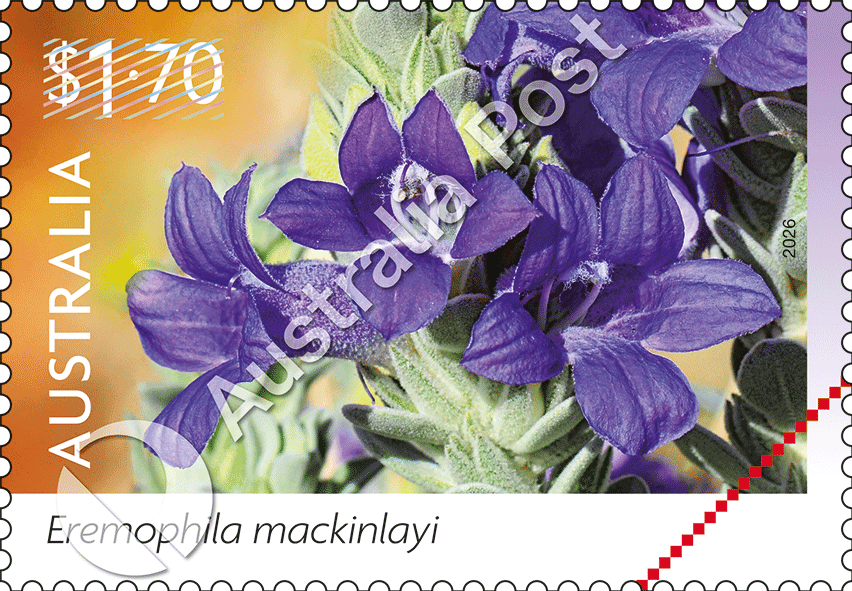
Eremophila mackinlayi
Eremophila mackinlayi originated in western-central Western Australia, and was named in 1864 by Victorian government botanist Ferdinand von Mueller after a Scottish-born explorer, John McKinlay. This dense, rounded shrub grows up to 1.5 metres in height, has hairy, green-grey, egg-or lance-shaped leaves, and flowers from May to October. It is commonly referred to as ‘Desert Pride’.
Photograph by Maree Goods.
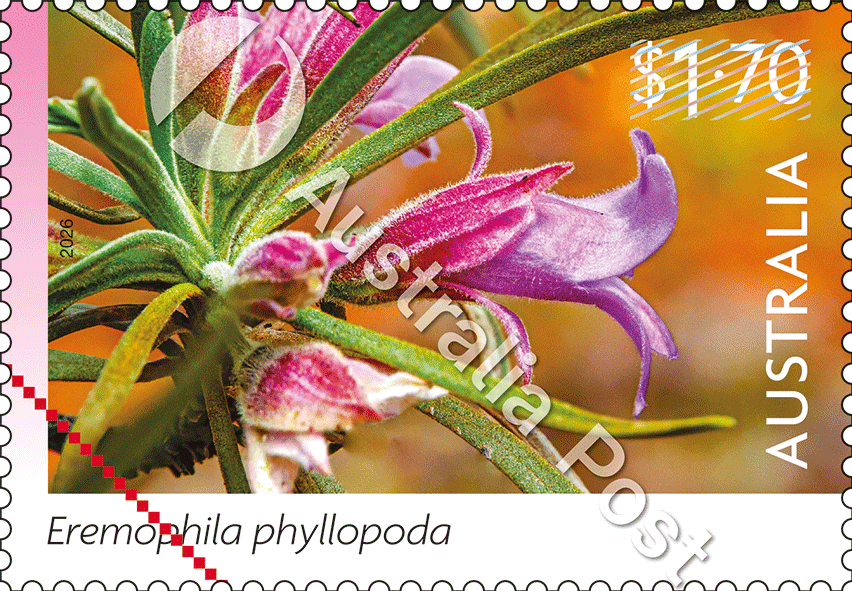
Eremophila phyllopoda
Eremophila phyllopoda is also found naturally in the arid regions of western- central Western Australia. It has become popular among Eremophila enthusiasts, due to its attractive and long-lasting flowers in various shades of pink. The name phyllopoda refers to the foot-like shape of its leaf.
Photograph by Janine Guenther.
Shop our Stamp Collectables
-
-
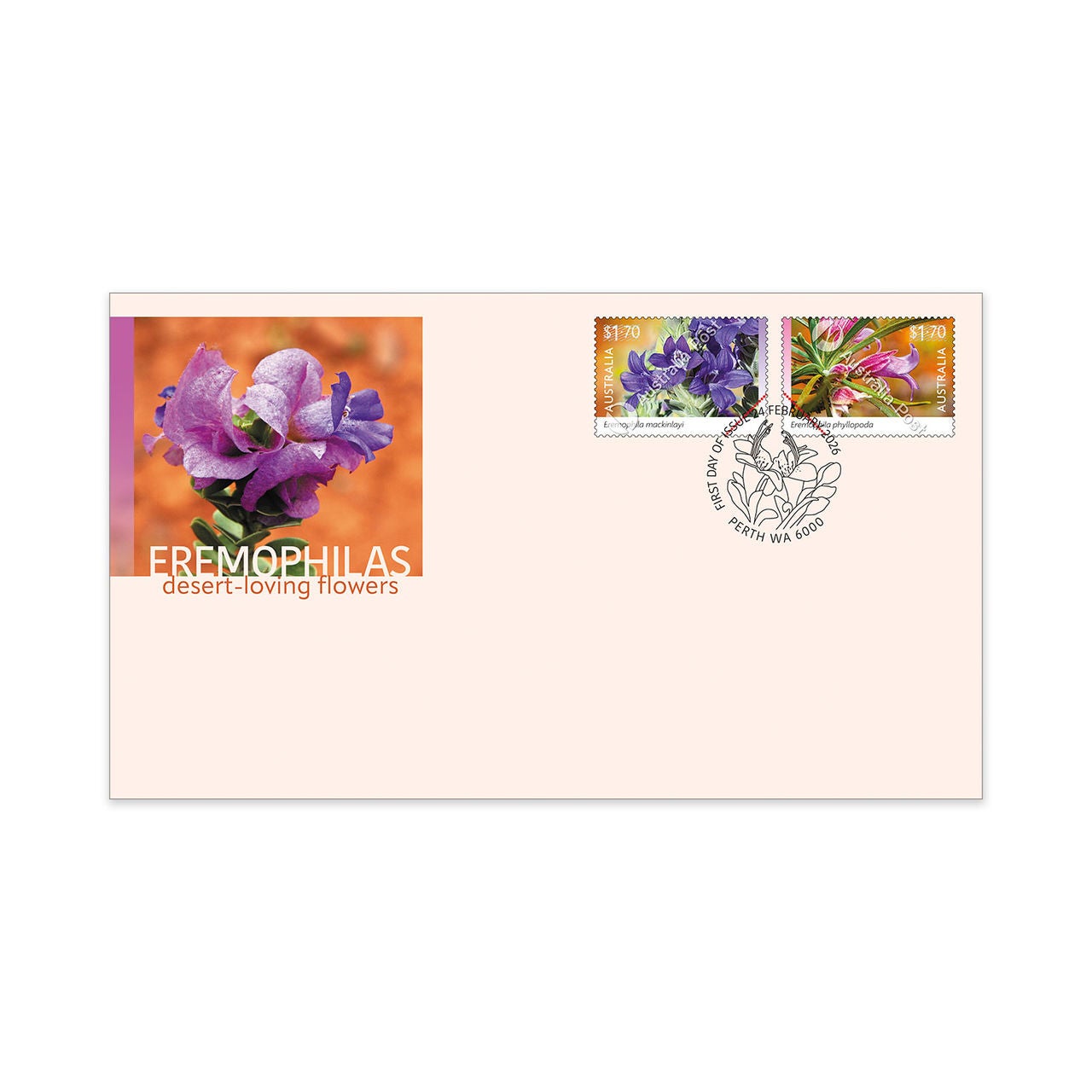
First Day Cover (Gummed)
-
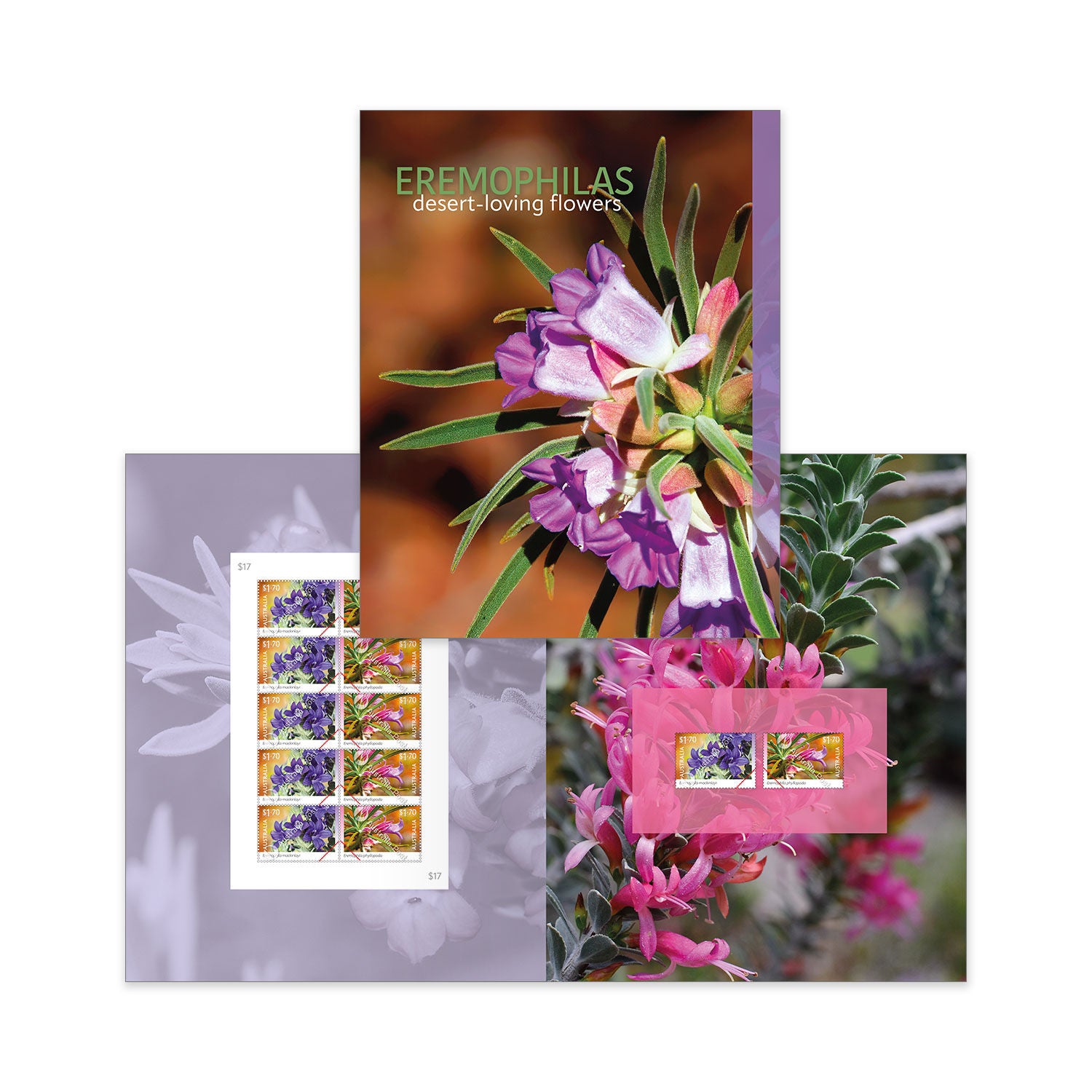
Stamp Pack
-
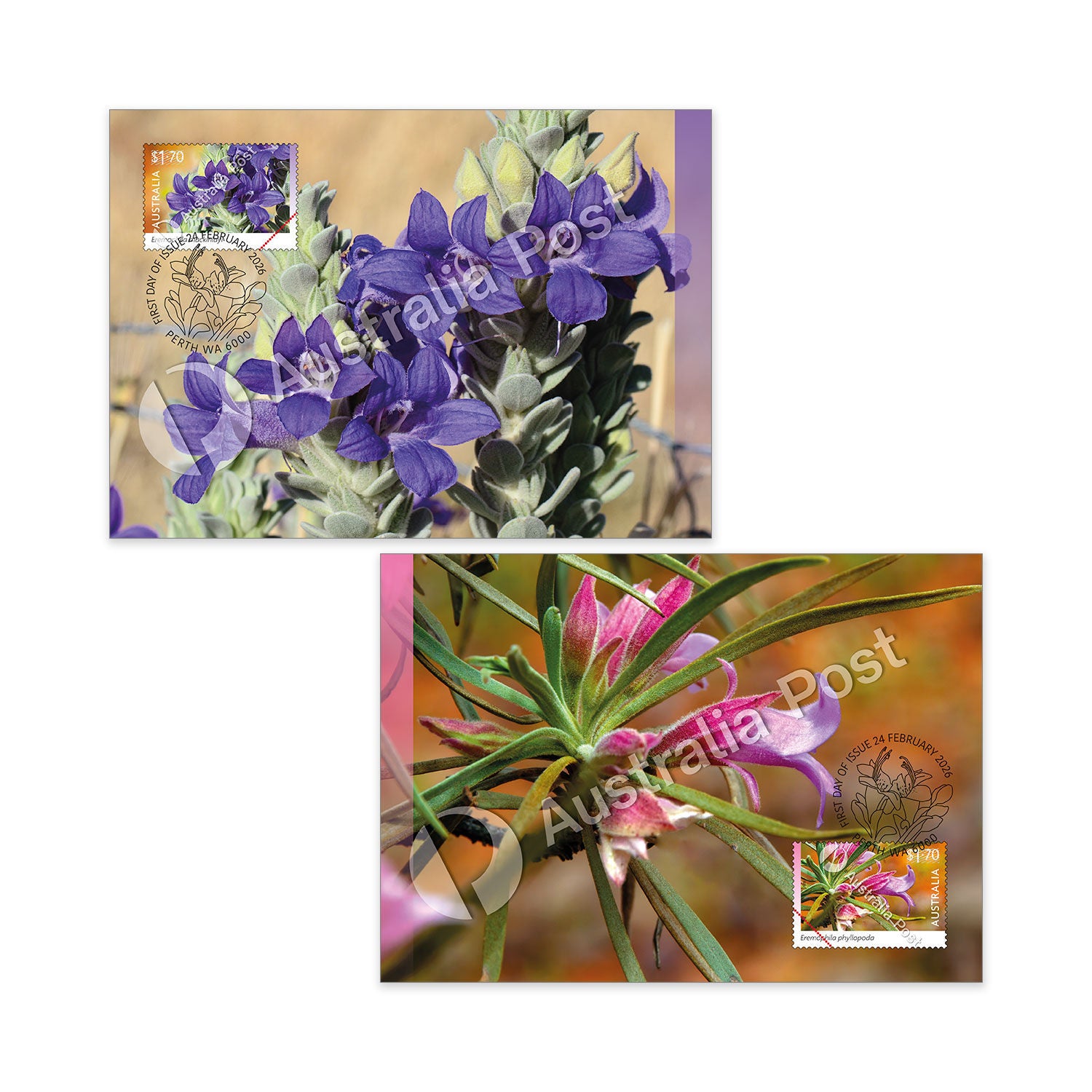
Maxicard (Set of 2)
This content was produced at the time of the stamp issue release date and will not be updated.