
OverviewSince European colonisation, around 29 Australian bird species and subspecies have become extinct. It is estimated that one in six species are currently threatened with extinction due to factors including degradation of habitat, predation by feral animals, changes in fire regime and temperature increases due to global warming. This issue features bird species classified nationally as endangered or critically endangered under the EPBC (Environment Protection and Biodiversity Conservation) Act. |
Issue date | 27 January 2026 |
Issue withdrawal date | 1 August 2026 |
Denomination | 3 x $1.70 |
Stamp & Product Design | Jo Muré, Australia Post Design Studio |
Illustration | Frances McMahon |
Paper: gummed | Tullis Russell 104gsm Red Phosphor/Blue PVA Stamp Paper |
Paper : Self adhesive | Tullis Russell Red Phos PSA (P55) 100gsm Release
|
Printer: gummed | RA Printing |
Printing process | Offset Lithography |
Stamp size (mm) | 37.5 x 26 |
Minisheet size (mm) | 135 x 80 |
Perforations (mm) | 13.86 x 14.6 |
Sheet layout | Module of 50 (2 x 25) |
FDI Postmark | Chatswood, NSW 2067 |
FDI Withdrawal date | 25 July 2026 |
Stamps in this issue
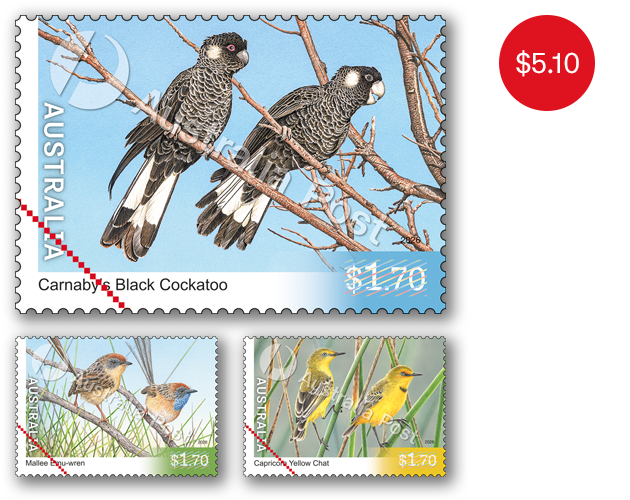
Carnaby’s Black Cockatoo
Carnaby’s Black Cockatoo Zanda latirostris is endemic to the south-west of Western Australia. Around 58 centimetres in length, this large cockatoo has grey-black plumage with white ear patches and tail band. Males have a dark grey beak and pink eye rings while females have paler beaks and grey eye rings. The population has declined due to clearing of feeding habitat and of trees with suitable breeding hollows. Carnaby’s Black Cockatoo is classified as nationally endangered.
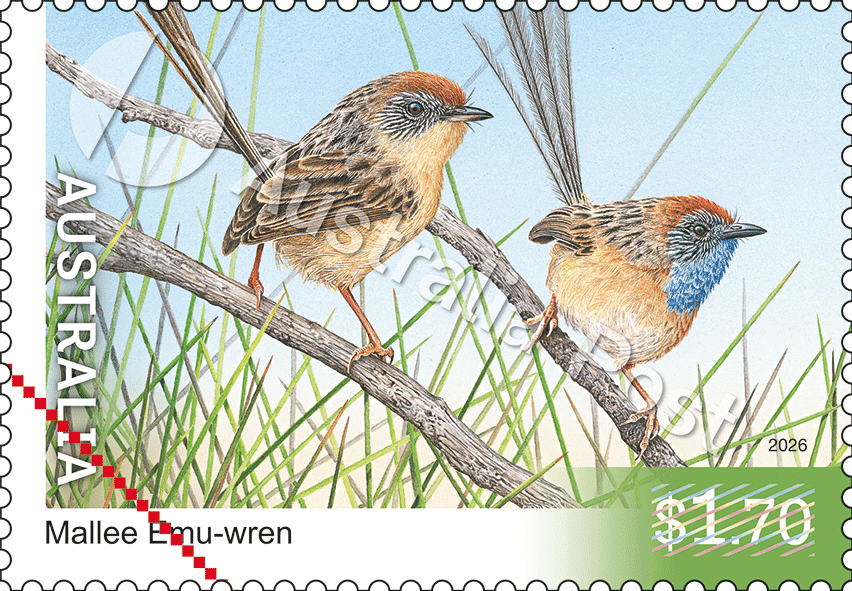
Mallee Emu-wren
Also listed as endangered, the tiny Mallee Emu-wren Stipiturus mallee measures around 16 centimetres, including the long tail, which sports six emu-like feathers. The plumage of both sexes is mostly brown, and the male has a breeding plumage of rufous cap and sky-blue face, throat and upper breast. The range of the Mallee Emu-wren is restricted to a small region of open mallee woodland in north-western Victoria. Until recently, the species was also in south-eastern South Australia but was wiped out recently by wildfire, the major threat to the species’ persistence. The photograph is by Adwo / Shutterstock.com.
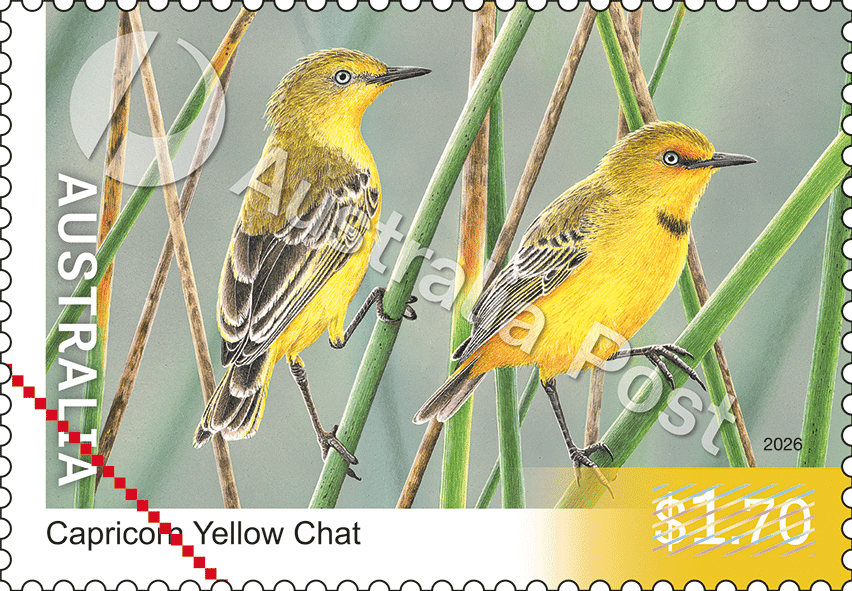
Capricorn Yellow Chat
One of Queensland’s rarest birds, the lively Capricorn Yellow Chat Epthianura crocea macgregori is native to the marine plains near Rockhampton in Queensland. Classified as critically endangered, the species was thought to be extinct until a small population was discovered in 1991. Measuring aound 11 centimetres, this subspecies is distinguished by its golden-yellow forehead and underparts and olive back. The male has a black band across the chest, and both sexes are paler when not breeding. Only 200 to 300 birds remain in three isolated locations. Threats to continuing survival include loss of natural habitat to feral pigs and sea level rise caused by climate change.
Shop our Stamp Collectables
-
-
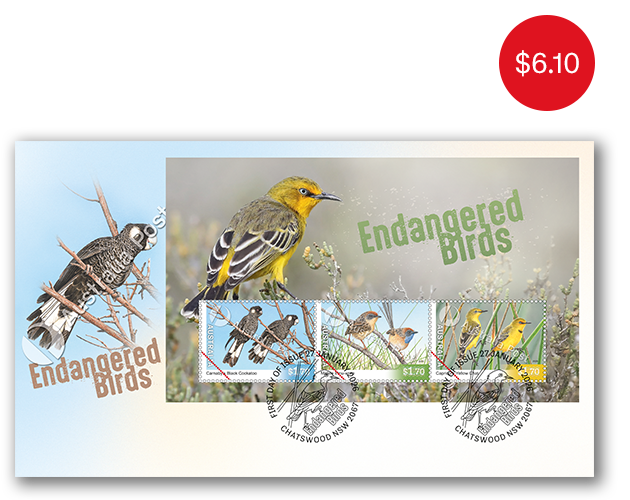
First Day Cover (Gummed)
-
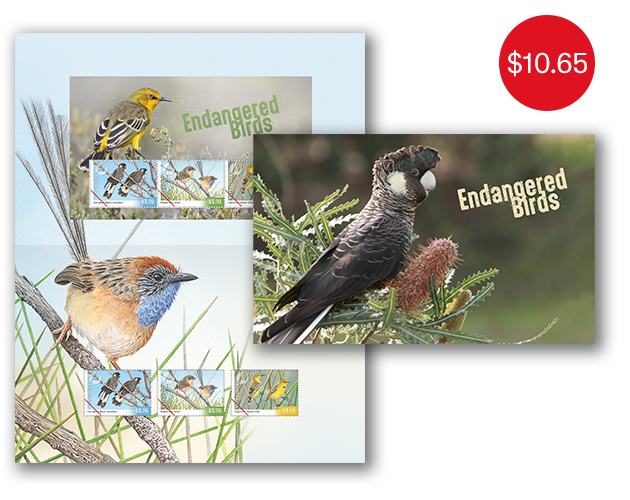
Stamp Pack
-
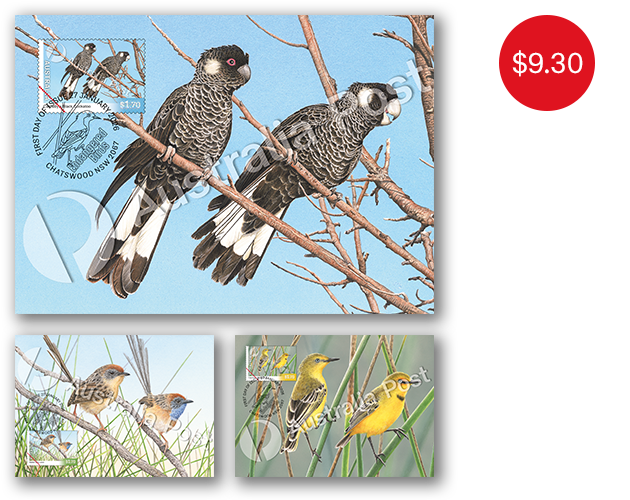
Maxicard (Set of 3)
This content was produced at the time of the stamp issue release date and will not be updated.