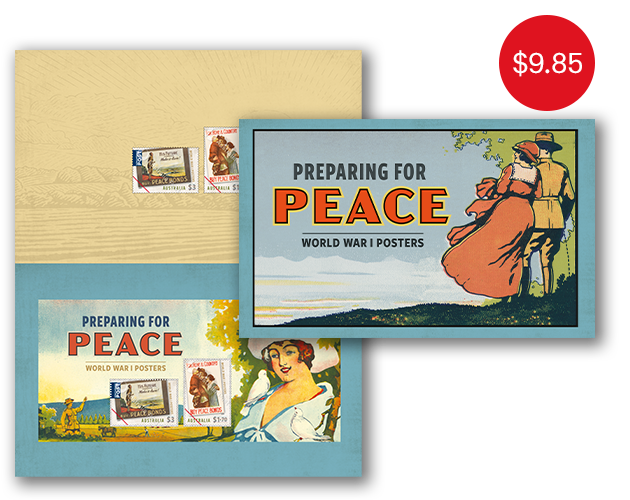
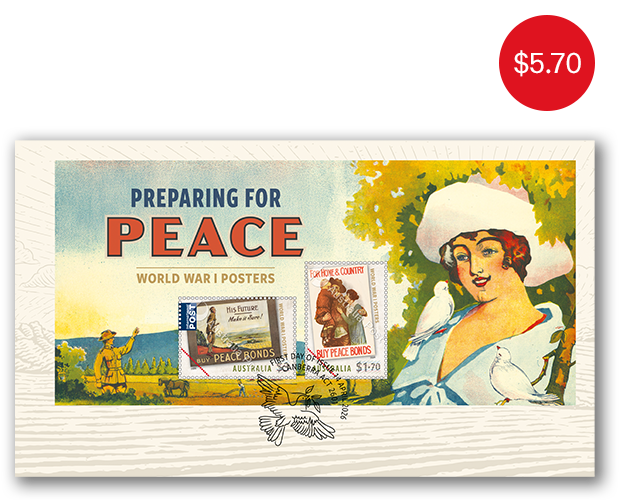
OverviewWar is an expensive undertaking, as is a nation’s recovery once conflict is over. This is true for both victorious nations and defeated ones. After World War I, the Australian Government needed to raise money to help recover some of the costs of waging war, and to assist ex-servicemen with resettlement, vocational training, employment and housing. Some support was also offered to war widows and returned nurses. To fund these efforts, the Commonwealth Bank of Australia (which from 1912 to 1960 served as Australia’s central bank) issued peace bonds on behalf of the government. This was a method of raising loans from the public: individuals and organisations bought bonds, which could be redeemed with interest. All Australians – even children – were encouraged to subscribe, to help their compatriots who had served to return to civilian life. The peace bonds followed a successful series of war loans issued during the conflict, which Australians had supported generously, well exceeding the bank’s original goal. In total, the seven war loans and three peace loans issued between 1915 and 1921 raised more than £250 million, from a population of just five million people. To encourage investment, most of the loans offered favourable tax treatment. The annual interest rate for the war loans was 4.5 or 5 per cent, and for the peace loans between 5 and 6 per cent, with loan periods varying between seven and ten years. The peace bonds were heavily promoted in various ways, including demonstrations of trades suitable for returned soldiers, participation by returned personnel (such as airmen making flypasts over cities and visiting country areas), the encouragement of rivalry between groups in buying more bonds, newspaper advertising, banners, public meetings, and ephemera such as posters. These posters were widely distributed and appealed to emotions such as patriotism, thrift, gratitude and hope; imagery often included women and children as well as military figures. The front of the stamp pack is based on a poster published by John Sands Ltd, in which a returned soldier and a brightly clad young woman look out optimistically towards the horizon. The minisheet is derived from a poster originally titled Subscribe to the Peace Loan, in which a young woman with two doves of peace smiles down on a soldier, his future as a farmer evident in the middle ground. |
Issue date | 14 April 2026 |
Issue withdrawal date | 1 November 2026 |
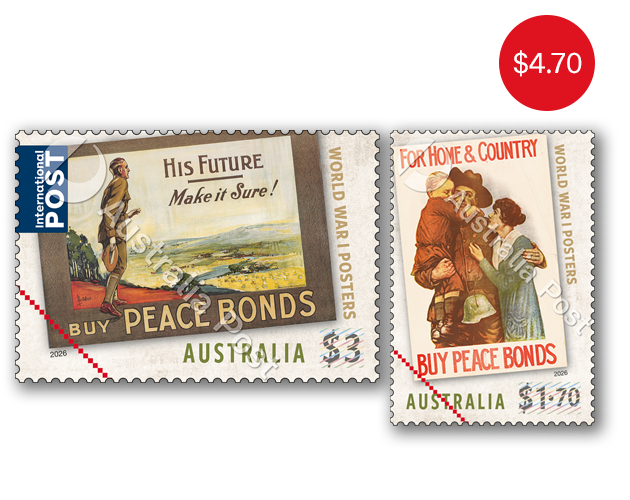
Denomination | 1 × $1.70 1 × $3 (international) |
Stamp & Product Design | Jo Muré, Australia Post Design Studio |
Paper: gummed | Tullis Russell 104gsm Red Phosphor/Blue PVA Stamp |
Paper: self adhesive | Tullis Russell Red Phos PSA (P55) 100gsm Release |
Printer | RA Printing |
Printing process | Offset Lithography |
Stamp size (mm) | $1.70: 26 x 37.5 $3: 37.5 x 26 |
Minisheet size (mm) | 170 x 80 |
Perforations (mm) | $1.70: 14.6 x 13.86 $3: 13.86 x 14.6 |
Sheet layout | Module of 50 |
FDI Postmark | Canberra, ACT 2601 |
FDI Withdrawal date | 13 October 2026 |
Stamps in this issue
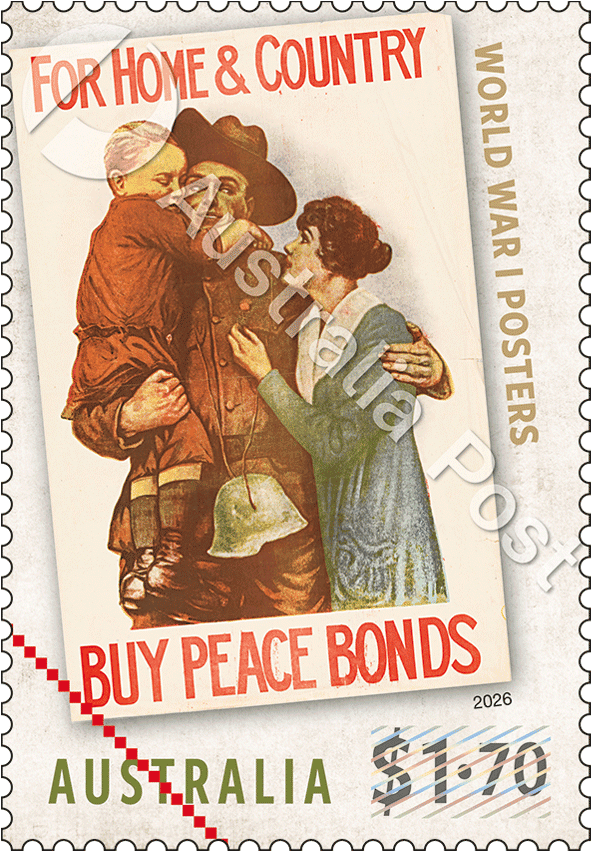
For Home & Country: Buy Peace Bonds
This poster features an Australian soldier embracing his son and his wife, the latter holding the medal pinned to her husband’s uniform, while hanging from a wire around his neck is a trophy of war: a German soldier’s helmet. This design is based closely on a 1918 American ‘Victory Liberty Loan’ poster – the only difference is the Australian digger’s slouch hat.
Mitchell Library, State Library of NSW, FL3511202.
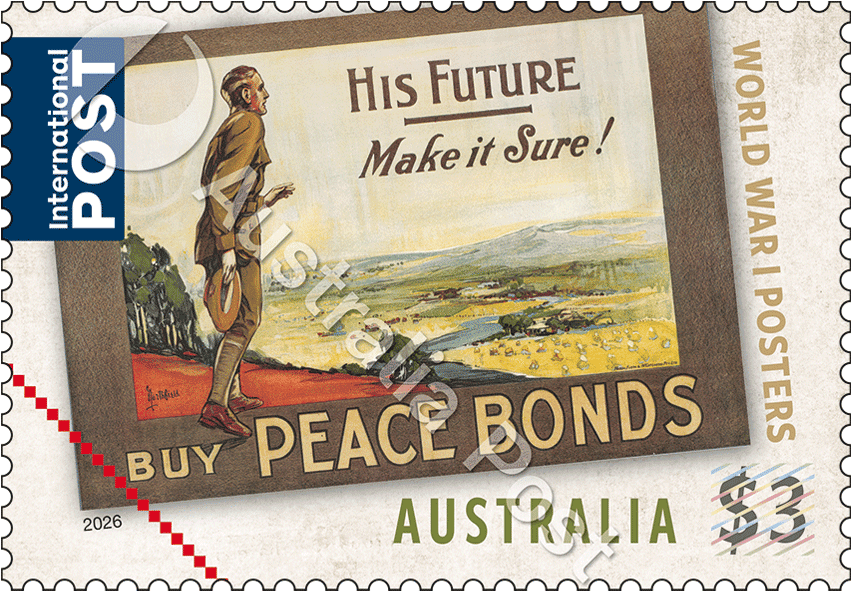
His Future – Make it Sure! Buy Peace Bonds
In this poster by renowned Australia poster artist James Northfield (1887–1973), published in 1919, a returned Australian soldier surveys – and walks towards – a peaceful rural landscape with a small farm in the middle ground, and smokestacks of industry in the distance.
National Library of Australia © James Northfield Heritage Art Trust.
This content was produced at the time of the stamp issue release date and will not be updated.
Shop our Stamp Collectables
-
-
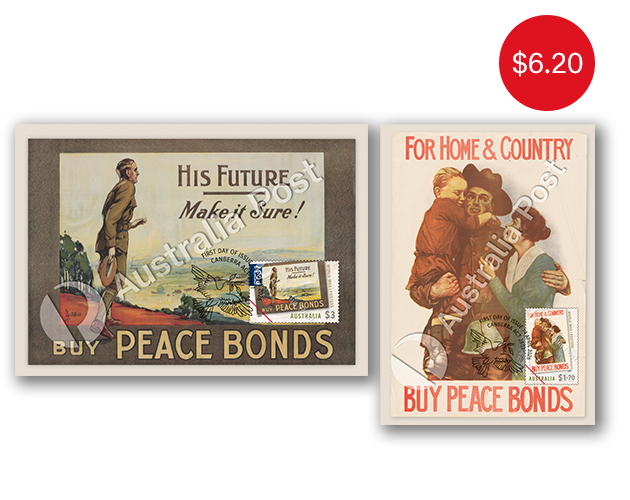
Maxicards
-
First Day Cover
-
Stamps